Pre Planned Funerals

Benefits of a funeral service.

Why have a funeral?

When someone passes, planning a funeral can feel overwhelming – but having arrangements in place ahead of time can make all the difference. Pre-arranging a funeral removes uncertainty, eases financial pressure, and allows families to focus on what truly matters during a difficult time.

A meaningful funeral service, while emotional, provides an important opportunity to come together, share memories, and honour a life well lived. It creates a supportive space where family and friends can connect, reflect, and begin the healing process.

Bringing loved ones together helps build a sense of comfort and strength, both during the service and in the days that follow. By acknowledging the loss and sharing in the experience, a funeral becomes a powerful first step toward acceptance, healing, and remembrance.

A preacher with a microphone in his hand holds a Bible and reads

Funeral Timing

The timing of a funeral is entirely your choice. There’s no legal deadline, and with all the details involved in a modern service, funerals often take place five to seven days later – or can be scheduled even further out so loved ones travelling from overseas can attend. When a funeral is pre-planned, arrangements can often be organised more quickly, allowing the service to take place sooner if desired.

Taking your time is still important. A thoughtful pace lets you make clear, confident decisions and helps avoid the regrets that can come from rushing.

What Do We Need?

Here are some things to consider:

  • Allow enough time. Set aside around 2 hours to meet and talk with your funeral director to begin pre planning .
  • Supportive family or friend.
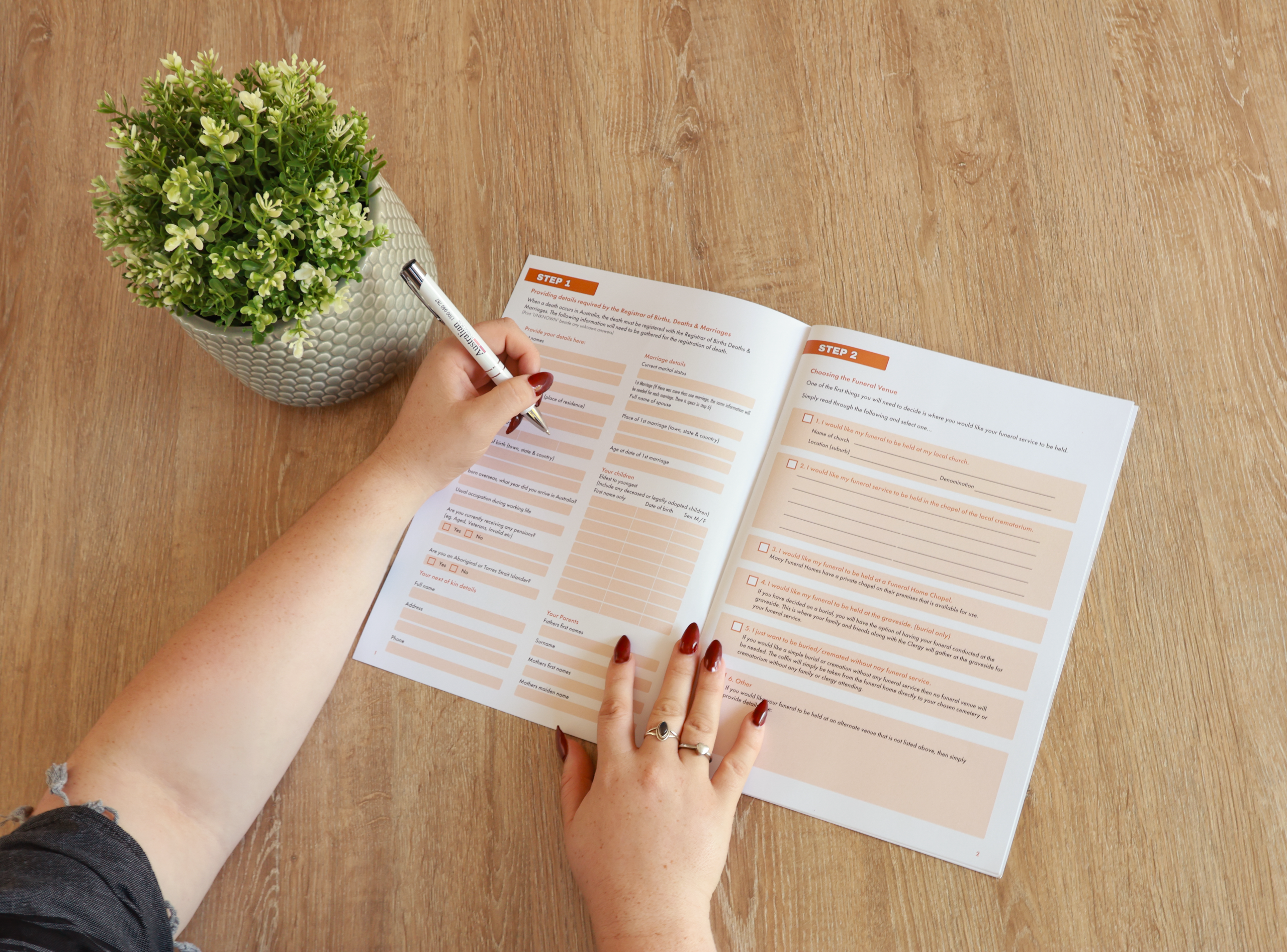
  • Information for Death Certificate. Information such as; parents names and occupations during working life, child/children names and DOB, marriage/s and other details
  • Credit card / Eftpos card / Cheque book.
  • Think about if you would like a viewing. A viewing can be held privately, often the day before the funeral.
  • Burial site reservation, if any.
  • A list of questions you may have.
  • Location of the service. will usually be agreed to in the first meeting.
  • Have some ideas about the ceremony itself – music, flowers, theme, coffin type etc.
  • Consider whether you want a burial or a cremation.
  • Expect an Account with the Cost Explained – We will discuss the account and explain the cost of each item. You will receive a fully itemised estimate of fees based on the arrangements you have chosen.

    Most families make payment by direct transfer of funds, credit card, cheque, or cash. We will guide you through this process.

Benefits of a Funeral

Rituals are symbolic acts that let us, along with our families and friends, voice our deepest feelings about life’s milestones. A baptism welcomes a newborn into the church community; birthday celebrations mark another year in a loved one’s life; weddings make a couple’s private commitment public.

Likewise, a funeral is a time‑honoured, symbolic gathering where we share our beliefs and emotions about a person’s passing. Steeped in history and meaning, the ceremony helps us face the reality of the loss, honour the life that was lived, express grief within our cultural values, lean on one another for support, draw on spiritual convictions, and find a sense of continuity and hope for the days ahead.

Important resources

When planning a funeral, certain documents and forms are essential. Keep the following paperwork stored safely and readily accessible:

  • Full legal name
  • Home address
  • Date of birth
  • Place of birth
  • Father’s full name and occupation
  • Mother’s full name, including maiden name and occupation
  • Recent photograph
  • Occupation
  • Place of burial (if applicable)
  • Details of existing or pre-arranged burial plots (if applicable)
  • Clothing
  • Next of kin (name, relationship, etc.)

Get In Touch

We’re here to help. Get in touch with our friendly team to learn more or start planning with confidence.